Our Built-Environment Neighbors: The Barn Swallow's Nesting Secrets
Few birds have woven themselves into the tapestry of human civilization quite like the Barn Swallow. With their elegant, flowing flight and distinctive forked tails, these agile aerialists are a familiar and welcome sight across rural landscapes and even semi-open suburban areas. Far from shying away from human presence, the Barn Swallow (
Hirundo rustica) has truly adopted us as neighbors, choosing our man-made structures as prime real estate for raising their young. This unique relationship makes them one of the most recognizable and cherished avian residents, captivating observers with their acrobatic displays and constant liquid chatter.
These delightful birds are not limited to North America; they are common across Europe and Asia, undertaking remarkable annual migrations to wintering grounds in southern Africa and South America. Their adaptability and preference for human-modified environments offer a fascinating glimpse into the evolving dynamics between wildlife and our expanding footprint.
A Symbiotic Relationship: Why Barn Swallows Choose Our Structures
For centuries, Barn Swallows nested in natural sheltered crevices, such as those found in cliffs or shallow caves. However, over time, a profound shift occurred. Today, it is exceptionally rare to find a Barn Swallow nest in a truly natural setting. Instead, these resourceful birds have embraced our architecture, transforming barns, garages, open buildings, and even the undersides of bridges, eaves, and wharves into their bustling nurseries.
Why this remarkable adaptation? Our structures offer a multitude of advantages. They provide unparalleled shelter from the elements – rain, wind, and direct sun – creating a protected microclimate ideal for delicate mud nests and vulnerable nestlings. Furthermore, many of these locations offer a degree of protection from natural predators, as access can be limited. The proximity to human habitation also often means an abundance of open fields, farms, and water sources, which are rich hunting grounds for flying insects.
For property owners, welcoming Barn Swallows can be a win-win situation. Their diet consists almost entirely of flying insects, making them highly effective natural pest controllers. Imagine having a squadron of dedicated insectivores patrolling your airspace, significantly reducing populations of flies (including house flies and horse flies), mosquitoes, beetles, and wasps. For those interested in harnessing this natural pest control, you can learn more about their remarkable abilities in
The Barn Swallow: A Natural Pest Controller of Farms and Fields.
To encourage Barn Swallows to nest on your property, consider leaving an open door or window in an outbuilding like a barn or garage during early spring. Providing a small, accessible ledge or even a ready-made nesting platform in a sheltered spot can also be highly effective. Remember, these birds are protected by law, so once they've built a nest, it cannot be disturbed until the young have fledged. If you absolutely must deter nesting in an inconvenient spot, install deterrents like netting *before* they begin building their mud masterpiece.
The Art of Nest Building and Raising Young
The nesting season for Barn Swallows begins early, with pairs forming quickly once they arrive at their breeding grounds – as early as March in southern states and April in central regions. Courtship is an aerial ballet, involving impressive dives, swoops, and chirping displays. Once a pair bonds, they set about constructing their iconic cup-shaped nest.
Both the male and female participate in this intricate construction, meticulously gathering pellets of mud and dried grasses, often from damp areas near water. They cement these materials together, layer by layer, to form a sturdy cup. The interior is then softened with a plush lining of feathers, creating a warm and secure cradle for their eggs. While several pairs may nest in the same immediate area, they typically maintain a respectable distance from each other, avoiding the dense colonies formed by some other swallow species.
A clutch usually consists of 4-5 white eggs, spotted with brown, though sometimes 6 or even rarely 7 can be laid. Incubation duties are shared, with the female typically taking on a greater share, for a period of 13-17 days. Once hatched, the altricial (helpless) nestlings are cared for by both parents, who tirelessly ferry insects back to the nest. The young grow rapidly, fledging (leaving the nest) approximately 18-23 days after hatching. Barn Swallows typically raise one or two broods per year, with peak hatching often occurring in late June.
Remarkably, their parenting often extends beyond the immediate pair. Sometimes, offspring from previous broods may return to the nest and assist their parents in feeding the current nestlings, showcasing a fascinating level of social cooperation. Furthermore, studies have revealed intriguing social dynamics: while generally monogamous, female Barn Swallows may copulate with other males. Interestingly, up to 50 percent of male Barn Swallows have been observed caring for and feeding at least one chick fathered by another male, and sometimes an entire clutch can be from an outside male. These complex social interactions, including their unique blend of monogamy and co-parenting, are further explored in
The Intriguing Social Lives of Barn Swallows: Monogamy & Co-Parenting.
Masters of the Air: Diet and Foraging Strategies
Barn Swallows are truly masters of aerial foraging. Their diet is overwhelmingly composed of insects, which they capture and consume almost exclusively on the wing. With incredible agility, they skim low over fields, pastures, and, especially, water bodies like marshes and lakes, where insect activity is often high. Their preferred menu includes a wide variety of flying insects:
- Flies (including house flies, horse flies, and mosquitoes)
- Beetles
- Wasps and wild bees
- Winged ants
- True bugs
- Moths
- Damselflies and dragonflies
- Grasshoppers
Only occasionally do they supplement their diet with a few spiders, snails, or, very rarely, berries or seeds. In instances of particularly bad weather, which can ground flying insects, Barn Swallows may sometimes feed on the ground, but this is a rare exception to their airborne hunting prowess. Their continuous pursuit of insects underscores their ecological importance as natural pest regulators.
A Life on the Wing: Migration and Appearance
Barn Swallows are long-distance migrants, undertaking incredible journeys twice a year. Their southward migration is well underway by mid-August, with flocks gathering and moving mostly by day. The epic journey takes them from their breeding grounds in North America, Europe, and Asia to their respective wintering territories in southern Africa and South America. These migrations are critical for their survival, allowing them to follow the seasons and ensure a constant supply of their insect prey.
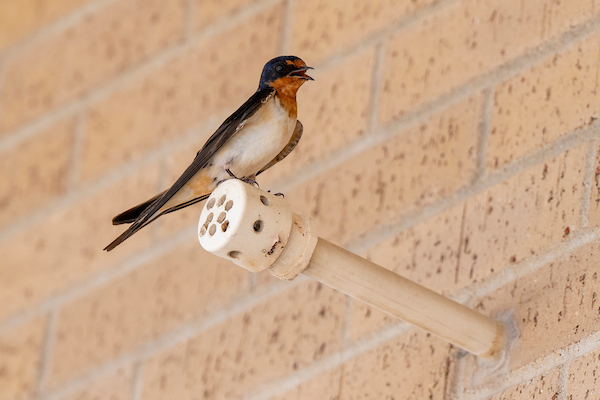
Identifying a Barn Swallow is relatively straightforward due to its striking appearance and unmistakable silhouette. They measure between 5 ¾ and 7 ¾ inches (15-20 cm) in length, characterized by a sleek build, pointed wings, and a very short bill. Their back is a brilliant, iridescent steel blue, contrasting sharply with a rich chestnut throat. The chest and belly can vary from a deep buff to a paler rusty or even white. The most distinctive feature is their deeply forked tail, often described as "swallow-tailed," which is longer in males and features small white spots that may be hidden when the tail is closed. Young birds, or juveniles, have paler underparts and noticeably shorter outer tail feathers compared to adults.
Beyond their visual appeal, their constant liquid twittering and chattering adds a lively soundtrack to the landscapes they inhabit, especially around nesting sites.
Understanding and Coexisting with Barn Swallows
Barn Swallows thrive in open or semi-open terrains, particularly near water, generally avoiding very dry regions and unbroken forests. Their natural habitat preferences make farms, fields, and areas around buildings and towns ideal, as these locations often offer both suitable nesting sites and abundant foraging opportunities.
Despite some local declines noted in specific areas, the Barn Swallow remains widespread and abundant globally, currently listed as "Least Concern" on the IUCN Red List. This status reflects their remarkable adaptability and successful coexistence with humans. However, continued awareness and responsible land management are crucial to ensure their populations remain healthy.
For those sharing their space with these charming birds, remember that Barn Swallows are an integral part of our ecosystem. Appreciating their role in natural pest control and providing safe nesting opportunities helps sustain their populations. If nests are built in inconvenient locations, gentle discouragement *before* construction begins is the best approach, rather than disturbing an active nest.
Conclusion
The Barn Swallow is more than just a bird; it's a testament to nature's adaptability and the unexpected harmonies that can emerge between wildlife and human development. From their graceful aerial acrobatics to their diligent parenting within our barns and under our bridges, these built-environment neighbors enrich our lives and landscapes. By understanding their nesting secrets, migratory patterns, and dietary needs, we can continue to foster a symbiotic relationship with these charismatic birds, ensuring their twittering presence remains a cherished sound for generations to come.